- High Tech & Manufacturing, Digital PMO
Safran Seats GB, part of the Safran Group, designs, manufactures, and supports aircraft seating for major airlines. Working in a highly regulated environment, the business manages complex engineering programmes with long lifecycles, strict compliance requirements and constant cross functional data exchange.
As pressure increased to modernise processes, standardise reporting and improve collaboration, Safran Seats GB partnered with MIGSO-PCUBED (MP). Together, we supported several digital initiatives within the Engineering Team, including an improvement programme focused on how the Certification Team planned, tracked and managed their testing of seats and seat furniture, a delivery critical compliance activity.
The challenge: Limited visibility as complexity increased
The Certification Team was responsible for planning, tracking, and delivering a high volume of tests critical to programme approval and regulatory compliance. The Certification process is pivotal because without successful completion, products cannot be installed on aircrafts. This activity was managed through a long-standing tracker that had evolved over time.
While familiar to the team, the tracker had become increasingly complex, making it fragile, difficult to maintain, and harder to use as data volumes and reporting needs grew. At the same time, the organisation’s culture relied on established operational processes, meaning any solution needed to improve control and insight without disrupting existing ways of working.
Key challenges included:
Data quality issues
Free text entry, inconsistent formats, and lack of validation led to errors, duplication, and unreliable reporting.
Poor visibility
Key information such as test status, upcoming schedules, and resource demand was buried in a complex tracker, making it difficult to see what was coming and when. This increased the risk of missing key Certification milestones which could lead to delay in aircraft launch.
Scheduling challenges
Upcoming tests and dependencies were not clearly visible, leading to uneven workload distribution and peaks in demand that created resource constraints.
Manual effort
The manual nature of the existing process pulled resources away from value-adding Certification work.
Resistance to change
Completely replacing the existing system was not viable due to user familiarity and cultural resistance.
Our approach: From trusted data to trusted decisions
MP applied a structured, collaborative approach aligned to Project and Portfolio Management principles, enabling Safran Seats GB to improve data reliability, planning visibility, and decision making without disrupting existing processes. The work was delivered iteratively in close partnership with stakeholders, combining workshops, incremental development, and regular validation to ensure the solution remained practical, sustainable, and aligned to operational needs.
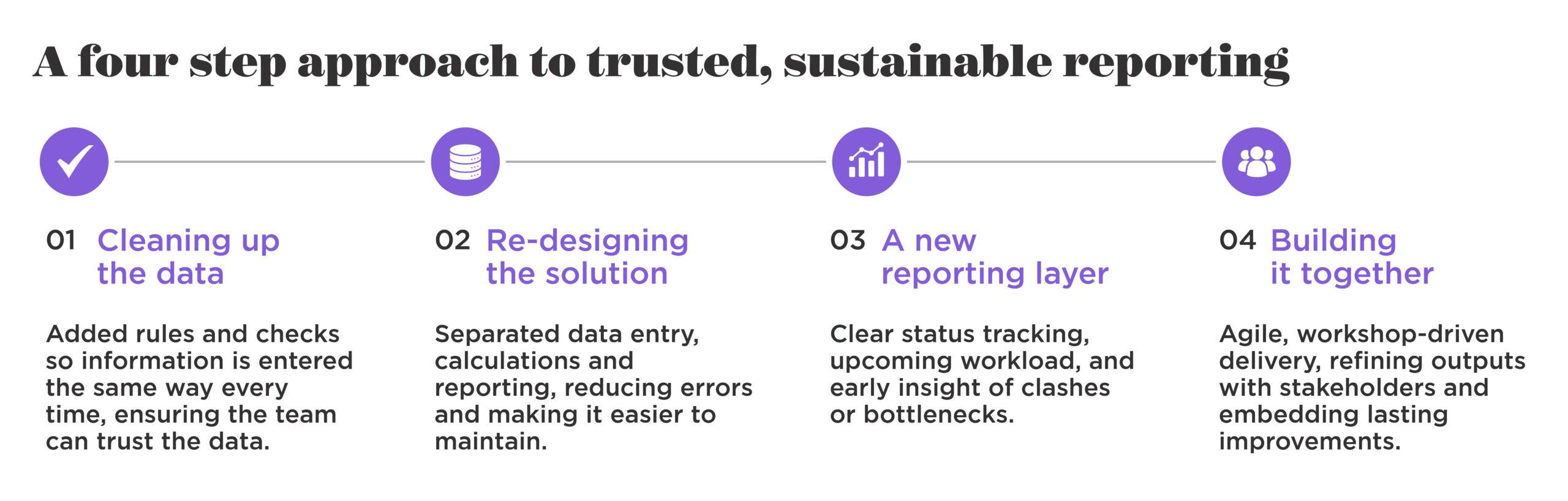
1. Understanding the current landscape and stabilising the data foundation
The engagement began with working sessions including key stakeholders to understand how test tracking data was captured, used, and reported across the team.
This allowed MP to identify inconsistencies, manual workarounds, and areas where poor data quality was limiting visibility and planning.
To stabilise the data foundation, we introduced structure and validation within the existing environment, including:
- Data validation rules to prevent free text errors and inconsistent entries
- Standardised formats and mandatory fields to improve consistency
- Controls to reduce duplication and minimise manual correction effort
This ensured the data could be relied upon as a basis for planning and reporting.
2. Introducing clear structure and sustainable tracking
Once the data foundation was stabilised, the tracker was redesigned to separate data entry, calculation logic, and reporting outputs.
This improved transparency, reduced the risk of accidental changes, and made the solution easier to maintain over time.
The design was developed collaboratively with the client through iterative reviews, ensuring the structure reflected how the team worked while moving towards more controlled and repeatable processes.
3. Enabling forward looking reporting and planning visibility
With reliable data in place, MP implemented a reporting layer to provide clear, consistent views of delivery status and upcoming workload. This allowed the team to move from reactive tracking to proactive planning.
The reporting capability provided:
- Clear visibility of test status and progress
- Forward looking views of upcoming activity
- Early identification of peaks, clashes, and bottlenecks
This supported strategic decision making and improved coordination across the programme.
4. Delivering iteratively to support adoption and long term use
The solution was delivered using an Agile, incremental approach, with regular engagement sessions to validate requirements, demonstrate progress, and refine the design based on feedback.
This collaborative delivery model ensured that:
- Stakeholders remained aligned throughout the project
- Changes could be introduced without disrupting delivery
- Improvements were embedded in a way that could be managed by the team
By combining structured data, clear reporting, and iterative delivery, MP enabled Safran Seats GB to move from manual, inconsistent tracking to reliable, forward-looking planning.
The benefits: Greater clarity, control, and confidence
This partnership successfully shifted the Certification Team from reactive follow ups to proactive, evidence based oversight. The improved tracker and reporting approach enhanced how Certification tests were monitored and controlled.
The collective value brought to Safran Seats GB includes:
Automation
Observed a 66% reduction in process time - manual, infrequent updates were replaced with automated real time refreshes, giving teams a continuously current view of Certification progress.
Improved data quality
Streamlined data sources reducing complexity by 33%. Coupled with embedded validation checks to ensure test data was complete, consistent, and audit-ready. This reduced rework and increased confidence in Certification decisions.
Early warning & risk reduction
Forward looking views highlighted emerging test backlogs and at risk Certifications early. This allowed Safran Seats GB to take corrective action before schedules or approvals were impacted, mitigating the risk of costly aircraft launch delays.
Enhanced monitoring
The deployed solution delivered a 2x increase in reporting frequency, enabling underperforming or stalled tests to become immediately visible, with all relevant context centralised to accelerate root cause analysis and resolution.
66% faster reporting
Manual, infrequent updates were replaced with automated refreshes, giving the team a continuously current view of Certification progress.
Turning Certification risk into competitive advantage
This demonstrated that effective digital transformation does not always require disruptive system change to deliver significant value. By working with established processes and adding additional structure, automation, and insight, MP strengthened the way a critical Certification function was supported.
The Safran Seats GB Certification Team has successfully reduced manual effort, increased confidence in their data, and gained earlier visibility of potential risks. This supported more informed planning, smoother coordination, and greater predictability in Certification delivery.
There was previously doubt around data validity and traceability but the deployed solution has solved this.
Engineering Project Lead, Safran Seats GB
For organisations operating in regulated engineering environments, the message is simple: small, pragmatic digital steps can significantly reduce risk and improve outcomes quickly and sustainably.
This article was written by George Rebello & Leyla Ulvi.
Ready to turn your data into a reporting asset you can trust?
Get in touch to discuss your challenge.
Key results
- 66% less time spent chasing and updating reports, now that they update themselves
- 33% reduction in data source complexity, with fewer places information lives, making checks and audits faster
- 2x more visibility in reporting, so problems and delays get spotted and flagged twice as often
- Earlier warning on Certification risks, catching issues before they cause costly delays